
Functional Coating Solutions for Optical Films and Plastic Substrates
Kaixin provides functional coating and surface treatment solutions for optical films, plastic films and sheets, integrating hard coating (HC), anti-glare (AG), anti-reflection (AR) and anti-fingerprint (AF) technologies for demanding optical and display applications.
By combining precision coating, micro-gravure coating, magnetron sputtering and material engineering capabilities, we support projects from coating selection and sample development through process validation and mass production.
Functional Coating Capabilities
HC / AG / AF Coating
Functional surface treatments for hardness, glare control, surface durability and contamination resistance.
AR Thin-Film Deposition
Magnetron sputtering with multilayer optical structures for reflection control and transmittance optimization.
Film & Sheet Processing
Coating capabilities for flexible optical films and rigid plastic sheets across different substrate formats.
Custom Development
Application-oriented coating development from material and performance requirements to process validation and mass production.
Functional Coating Solutions
Kaixin combines functional coating, optical thin-film deposition and material engineering to provide surface solutions for different optical, mechanical and downstream processing requirements. Our core capabilities cover optical performance enhancement, surface protection and pre-cured functional films for forming and molding applications.
AG, AR & AF Optical Coatings
Optical surface treatments designed to improve display visibility, reflection control and surface cleanliness across demanding display and optical applications.
- AG: reduces glare and unwanted surface reflections
- AR: reduces reflectance and improves optical transmission
- AF: improves fingerprint and smudge resistance
Optical Hard Coating Films & Sheets
Protective hard coating solutions engineered to improve scratch resistance, abrasion resistance and long-term surface durability while maintaining controlled optical performance.
- Scratch and abrasion resistance
- Surface hardness and durability
- Optical performance retention
- PC, PMMA, PC/PMMA and PET substrates
Pre-cured Functional Film Solutions
Pre-cured functional films integrate durable surface functionality before downstream processing, providing a practical material platform for printing, forming and molding applications.
- Coating cured before downstream forming
- Compatible with printing and forming processes
- Designed for FIM / IMD applications
- Application-specific material and coating structures
Functional Coating Technologies
Kaixin integrates multiple coating and thin-film deposition technologies to support different substrate formats, coating functions and optical performance requirements. The appropriate process is selected according to the substrate, target surface properties and application requirements.
Curtain Coating
Curtain coating is used for functional surface treatment of optical sheets and rigid plastic substrates, providing controlled coating application for surface protection and optical functionality.
- HC, AG and AF surface treatments
- Substrate thickness: ≥0.38 mm
- Maximum processing size: 1360 × 2440 mm
- Suitable for optical sheets and rigid substrates
Micro-Gravure Coating
Micro-gravure coating supports controlled functional coating of thin optical films in roll-to-roll processing, providing a suitable platform for consistent surface treatment across flexible film substrates.
- HC, AG and AF functional coatings
- Substrate thickness: 0.025–0.38 mm
- Thickness tolerance: ±0.005 mm
- Maximum web width: 1410 mm
Magnetron Sputtering
Magnetron sputtering enables multilayer optical thin-film deposition with controlled film thickness and refractive-index structures for anti-reflective optical surfaces.
- AR thin-film deposition
- Multilayer optical structures
- Maximum processing size: 400 × 600 mm
Substrates and Material Platforms
Functional coating performance depends on both the coating system and the underlying substrate. Kaixin works with multiple optical film and plastic material platforms, allowing coating structures to be selected according to optical performance, mechanical properties, forming requirements and downstream processing conditions.
PC Film
Polycarbonate (PC) film combines optical transparency, impact resistance and forming capability, making it suitable for functional coating applications that require both surface performance and mechanical durability.
- High impact resistance
- Good forming capability
- Suitable for optical and display components
PET Film
PET film provides good dimensional stability and processing consistency for thin-film coating applications, including roll-to-roll functional surface treatment and downstream converting processes.
- Good dimensional stability
- Suitable for thin-film processing
- Compatible with roll-to-roll coating
PMMA Film
PMMA film offers high optical clarity and good surface appearance, making it suitable for applications where transparency and visual quality are primary material requirements.
- High optical clarity
- Good surface appearance
- Suitable for display and decorative applications
PC/PMMA Composite Film
PC/PMMA composite film combines the mechanical advantages of PC with the optical and surface characteristics of PMMA, providing a balanced material platform for demanding functional surfaces.
- Composite material structure
- Balance of optical and mechanical properties
- Suitable for forming and functional surface applications
Custom Functional Coating Development
Different applications require different combinations of optical performance, surface durability, material properties and downstream process compatibility. Kaixin develops application-oriented coating solutions by matching the substrate, functional coating system and processing requirements to the target application.
Application-Oriented Coating Design
Rather than treating the coating as an isolated surface treatment, we evaluate the complete material and processing system. Functional requirements can be combined and optimized according to the intended use and validated process window.
- Single or combined coating functions
- Substrate and coating compatibility
- Optical and surface performance targets
- Downstream processing requirements
- End-use environment and durability requirements
Coating Development Parameters
| Development Area | Typical Considerations |
|---|---|
| Substrate | PC, PET, PMMA, PC/PMMA and application-specific material structures |
| Surface Function | HC, AG, AR, AF and validated functional combinations |
| Optical Performance | Transmittance, reflectance, haze, glare control and visual appearance |
| Surface Performance | Hardness, abrasion resistance, fingerprint resistance and surface durability |
| Downstream Processing | Printing, forming, molding, lamination and precision converting |
| Application Environment | Temperature, humidity, UV exposure, cleaning and long-term use conditions |
Validated combinations such as HC + AG, AG + AF and HC + AR can be evaluated according to project requirements. Other functional combinations are subject to material compatibility, process feasibility and validation requirements.
From Requirement to Mass Production
Functional coating development begins with the target application rather than a predefined coating specification. Kaixin evaluates material, surface performance and downstream processing requirements, then develops and validates a suitable coating solution before mass-production introduction.
-
Application Review
Define the end-use application, substrate format, functional requirements, operating environment and key performance targets.
-
Material Selection
Evaluate the appropriate substrate material, thickness and material structure according to optical, mechanical and processing requirements.
-
Coating System Development
Select and develop the appropriate HC, AG, AR, AF or validated combined coating structure based on the required surface functionality.
-
Sample Evaluation
Prepare samples for evaluation against agreed optical, surface and durability requirements before further process validation.
-
Process Validation
Evaluate coating stability and compatibility with relevant downstream processes such as printing, forming, molding, lamination or converting.
-
Mass Production Introduction
Transfer the validated material and coating configuration into controlled production for consistent batch manufacturing and long-term supply.
Applications of Functional Coatings
Functional coatings are used where optical performance, surface durability and user interaction must be balanced with material and processing requirements. Kaixin supports coating solutions for display, electronics, automotive and optical applications across both film and sheet substrates.
Automotive Displays & Interior Components
Functional coatings support automotive display and interior surfaces where optical clarity, glare control, surface durability and cleanability are important to long-term use.
- Center and control displays
- Touch interfaces
- Decorative and functional panels
- FIM / IMD components
Consumer Electronics
Coated optical films and plastic surfaces can improve viewing performance, touch-surface cleanliness and resistance to everyday wear in consumer electronic products.
- Touch displays
- Display cover surfaces
- Control interfaces
- Functional decorative surfaces
Industrial Displays & Control Panels
Industrial interfaces often require durable optical surfaces that maintain visibility and functional performance under frequent operation and cleaning.
- Human-machine interfaces (HMI)
- Operator control panels
- Equipment displays
- Protective optical surfaces
Optical Components
Functional coating and thin-film deposition can be applied to optical components where reflection control, transmittance and surface protection are key performance considerations.
- Optical windows
- Display optical components
- Protective optical surfaces
- Application-specific optical parts
Functional Coating Manufacturing Capabilities
Kaixin operates dedicated coating and thin-film deposition equipment for both film and sheet processing, supporting functional coating projects from sample development and process validation through trial production and scaled manufacturing.
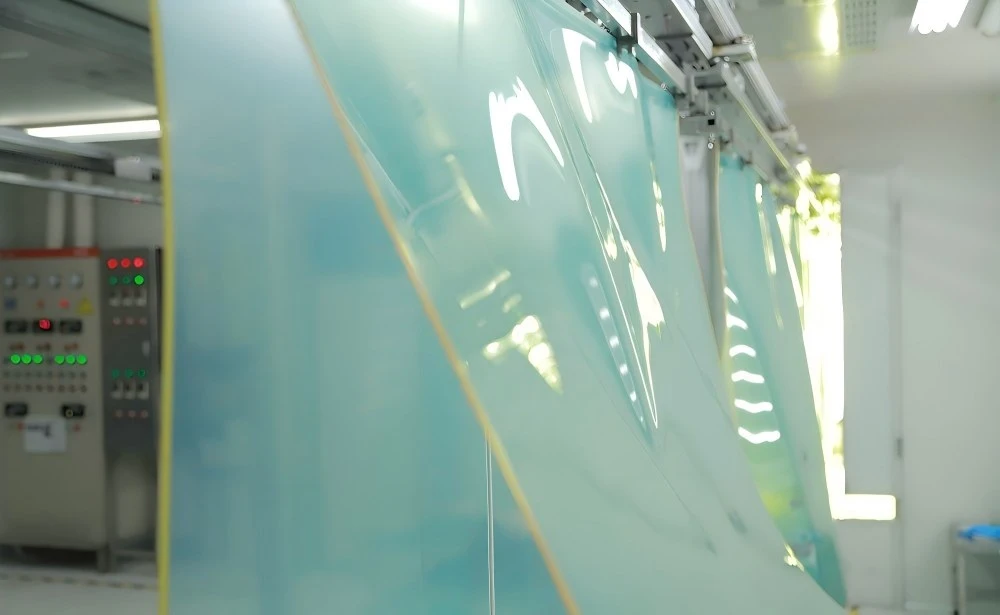
Coating and Deposition Infrastructure
Our manufacturing platform combines coating and vacuum deposition technologies for different substrate formats and functional requirements.
- 2 Curtain Coating Lines — functional coating of optical sheets and rigid substrates
- 2 Micro-Gravure Coating Lines — roll-to-roll coating of thin optical films
- 1 Magnetron Sputtering System — multilayer optical thin-film deposition for AR applications
Quality Control and Compliance
Consistent functional coating performance depends on controlled materials, coating processes and inspection throughout production. Kaixin applies standardized quality management and process monitoring to support stable coating performance and batch-to-batch consistency.
Quality Management Throughout Production
Quality control is integrated throughout the functional coating production process, with inspection and monitoring used to manage coating consistency and product quality from development through mass production.
- Standardized production and quality-control procedures
- Inspection equipment integrated into production lines
- Process monitoring throughout manufacturing
- Batch tracking and quality consistency management
Management Systems and Environmental Compliance
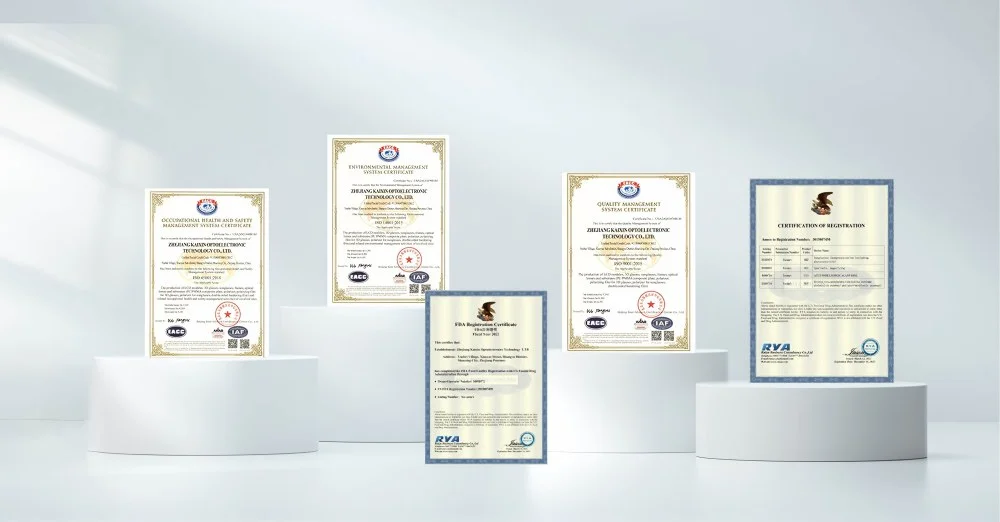
Kaixin operates under established quality, environmental and occupational health and safety management systems, supporting functional coating production for customers serving international markets.
- ISO 9001 — Quality Management System
- ISO 14001 — Environmental Management System
- ISO 45001 — Occupational Health and Safety Management System
- RoHS — Restriction of Hazardous Substances compliance
Why Choose Kaixin for Functional Coating?
Kaixin combines material knowledge, multiple coating technologies, application-oriented development and manufacturing capabilities to support functional coating projects from initial evaluation through mass production.
Integrated Material & Coating Expertise
Coating development is evaluated together with substrate properties, optical requirements and downstream processing, helping align the complete material system with the target application.
Multiple Coating Technologies
Curtain coating, micro-gravure coating and magnetron sputtering provide different process platforms for functional films, rigid sheets and optical thin-film deposition.
Application-Oriented Development
Functional coating structures can be developed around specific surface, optical, durability and processing requirements rather than relying on a fixed standard configuration.
Development to Mass Production
Kaixin supports sample development, trial production and scaled manufacturing, providing a practical path from coating evaluation and process validation to long-term production supply.
Functional Coating FAQs
What is functional coating for optical films and plastic substrates?
Functional coating is a surface treatment used to add or improve specific optical, protective or surface properties of a film or plastic substrate. Depending on the application, these functions may include hardness and abrasion resistance, glare reduction, reflection control and fingerprint resistance.
What functional coatings does Kaixin provide?
Kaixin provides hard coating (HC), anti-glare (AG), anti-reflection (AR) and anti-fingerprint (AF) solutions for optical films, plastic films and sheets. Different coating technologies are selected according to the substrate, required surface function, optical targets and downstream processing requirements.
What is the difference between HC, AG, AR and AF coatings?
HC improves surface hardness, scratch resistance and abrasion resistance. AG reduces glare and unwanted reflections through controlled surface characteristics. AR uses optical thin-film structures to reduce surface reflection and improve optical transmission, while AF improves resistance to fingerprints, oils and surface contamination.
These functions address different performance requirements and may be used individually or, where technically appropriate, in validated combinations.
What substrate materials can be used for functional coating?
Kaixin works with optical and engineering plastic substrates including PC, PET, PMMA and PC/PMMA composite materials. Substrate selection depends on optical performance, mechanical properties, thickness, forming requirements and downstream processing conditions.
Can multiple coating functions be combined?
Yes. Functional coating systems can combine multiple surface functions where the material structure and process are compatible. Validated combinations include HC + AG, AG + AF and HC + AR.
The appropriate combination should be evaluated according to the substrate, target performance, downstream processing and end-use conditions rather than selected as a fixed coating package.
Does Kaixin support custom functional coating development?
Yes. Kaixin supports application-oriented coating development based on customer requirements for substrate, optical performance, surface durability, downstream processing and operating environment.
Projects can progress from requirement evaluation and sample development through process validation, trial production and scaled mass production.
Request a Functional Coating Solution
Tell us about your substrate, target surface performance, application and downstream processing requirements. Our team can help evaluate the appropriate coating technology, material structure and development route for your project.
Information Helpful for Evaluation
- End-use application
- Substrate material and thickness
- Film or sheet dimensions
- Required surface function: HC, AG, AR, AF or a combination
- Optical performance requirements
- Surface durability requirements
- Printing, forming, molding, lamination or other downstream processes
- Operating and environmental conditions
- Estimated annual or project volume
If a complete specification is not yet available, preliminary application requirements or reference samples can also be provided for initial evaluation.